.jpeg)
Magellanic Penguin
Scientific name: Spheniscus magellanicus
Size: 4.9 kg (m), 4.6 kg (f)
Nest type: burrow or under bushes
Favourite food: small fish
Similar to African Penguin (to which it is very closely related), but breeding on the opposite side of the Atlantic. It is also the only migratory, offshore-foraging species in this genus.
 Identification:
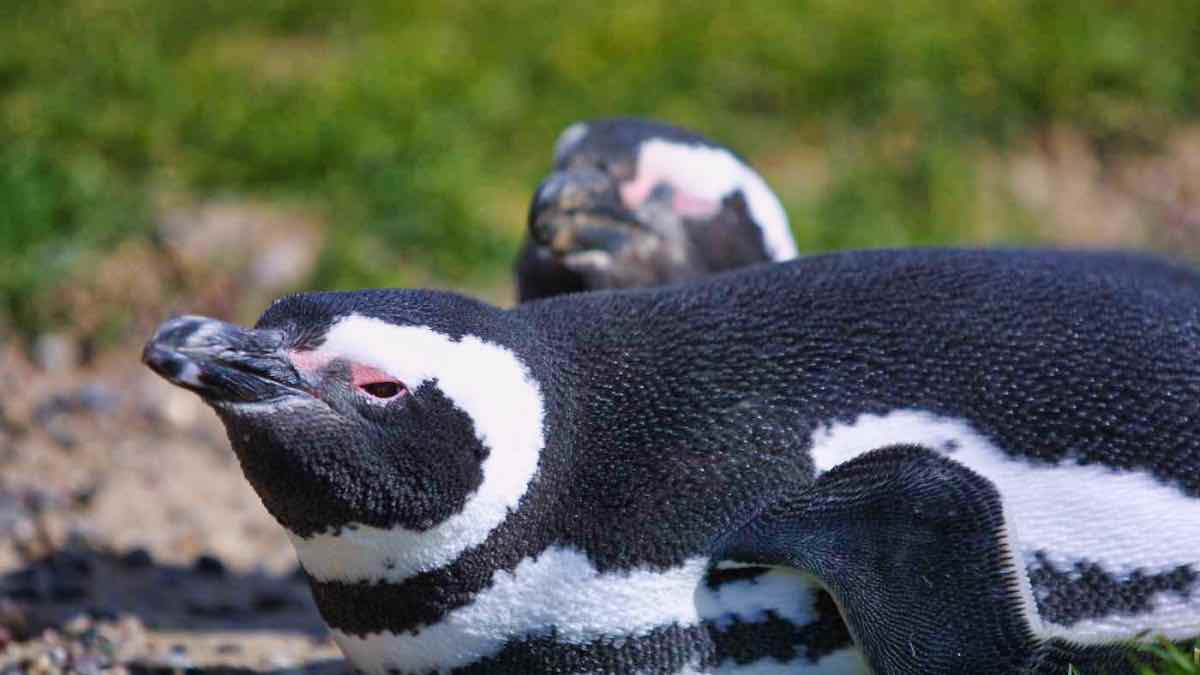
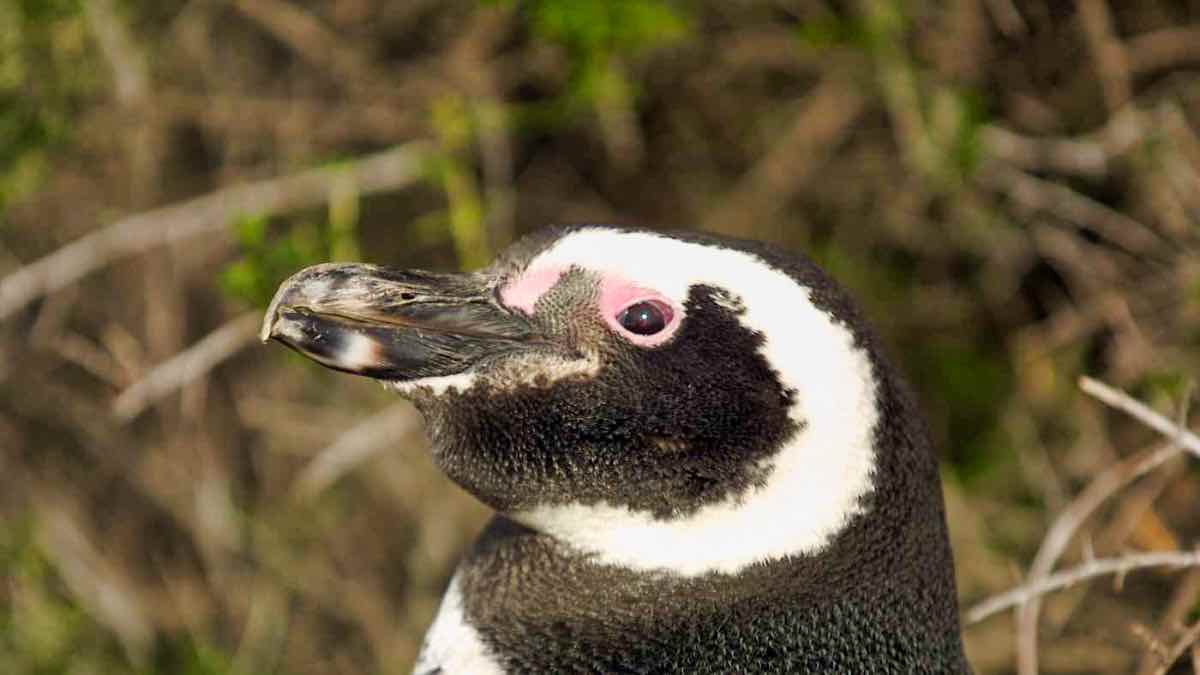
It is the only Spheniscus penguin found over most of its range, but overlaps the distribution of Humboldt Penguins around Puerto Montt, Chile. Humboldt Penguins lack the second dark breast band found in Magellanic Penguin and have more extensive areas of bare facial skin. However, as both of these characters are subject to individual variation and hybrids do occur, not every bird might be identifiable. Some immature birds undergo partial head moult during winter and gain the pied head pattern of adults.
Habits:
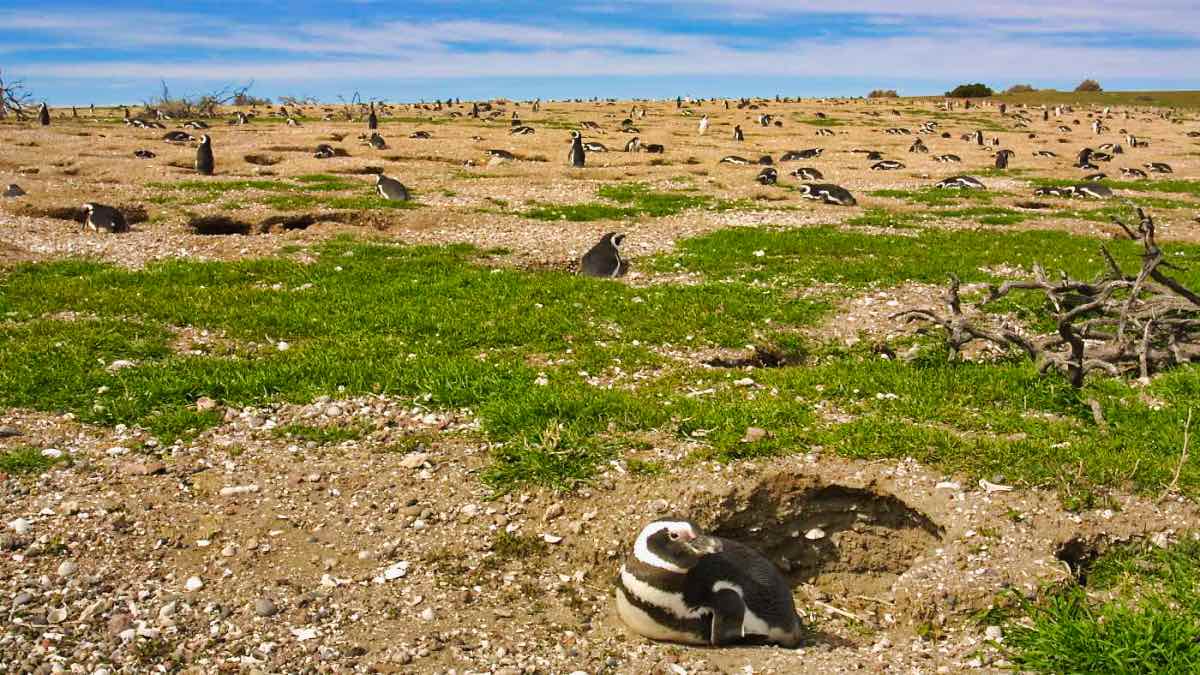
Breeds in burrows where digging is possible, otherwise on the surface or under bushes. Colonies form in a variety of habitats from low forests to grassland to bare rocks, often on islands or headlands. Some colonies on the Argentinean side number several hundreds of thousands of pairs.
Distribution: map
Breeds around the southern tip of South America from 40°S in Argentina to 37°S in Chile, as well as on the Falkland Islands. The largest colonies are found on the Atlantic side of South America.
Migration and Vagrancy:
Magellanic Penguins are migratory, some birds moving as far north as Peru and Brazil in winter. Vagrants have been recorded in South Georgia, on the Antarctic Peninsula, Australia, and New Zealand.
Diet:
Fish, mainly anchovies and sardines, are supplemented by cephalopods. Considerable variation between sites and years has been recorded, however, and one study found a small crustacean to be the main prey item.
Size: 4.9 kg (m), 4.6 kg (f)
Nest type: burrow or under bushes
Favourite food: small fish
Similar to African Penguin (to which it is very closely related), but breeding on the opposite side of the Atlantic. It is also the only migratory, offshore-foraging species in this genus.
It is the only Spheniscus penguin found over most of its range, but overlaps the distribution of Humboldt Penguins around Puerto Montt, Chile. Humboldt Penguins lack the second dark breast band found in Magellanic Penguin and have more extensive areas of bare facial skin. However, as both of these characters are subject to individual variation and hybrids do occur, not every bird might be identifiable. Some immature birds undergo partial head moult during winter and gain the pied head pattern of adults.
Habits:
Breeds in burrows where digging is possible, otherwise on the surface or under bushes. Colonies form in a variety of habitats from low forests to grassland to bare rocks, often on islands or headlands. Some colonies on the Argentinean side number several hundreds of thousands of pairs.
Distribution: map
Breeds around the southern tip of South America from 40°S in Argentina to 37°S in Chile, as well as on the Falkland Islands. The largest colonies are found on the Atlantic side of South America.
Migration and Vagrancy:
Magellanic Penguins are migratory, some birds moving as far north as Peru and Brazil in winter. Vagrants have been recorded in South Georgia, on the Antarctic Peninsula, Australia, and New Zealand.
Diet:
Fish, mainly anchovies and sardines, are supplemented by cephalopods. Considerable variation between sites and years has been recorded, however, and one study found a small crustacean to be the main prey item.