Gentoo Penguin
Scientific name: Pygoscelis papua
Size: 5.6 kg (m), 5.1 kg (f)
Nest type: in colonies in the open
Favourite food: krill and fish
This is the most northern penguin of this genus and, in many other respects, the odd one out. In contrast to Chinstrap and Adelie Penguins, some Gentoo Penguins can be found around their breeding colonies all year round and they forage much closer inshore than the other two Pygoscelis species.
 Identification:
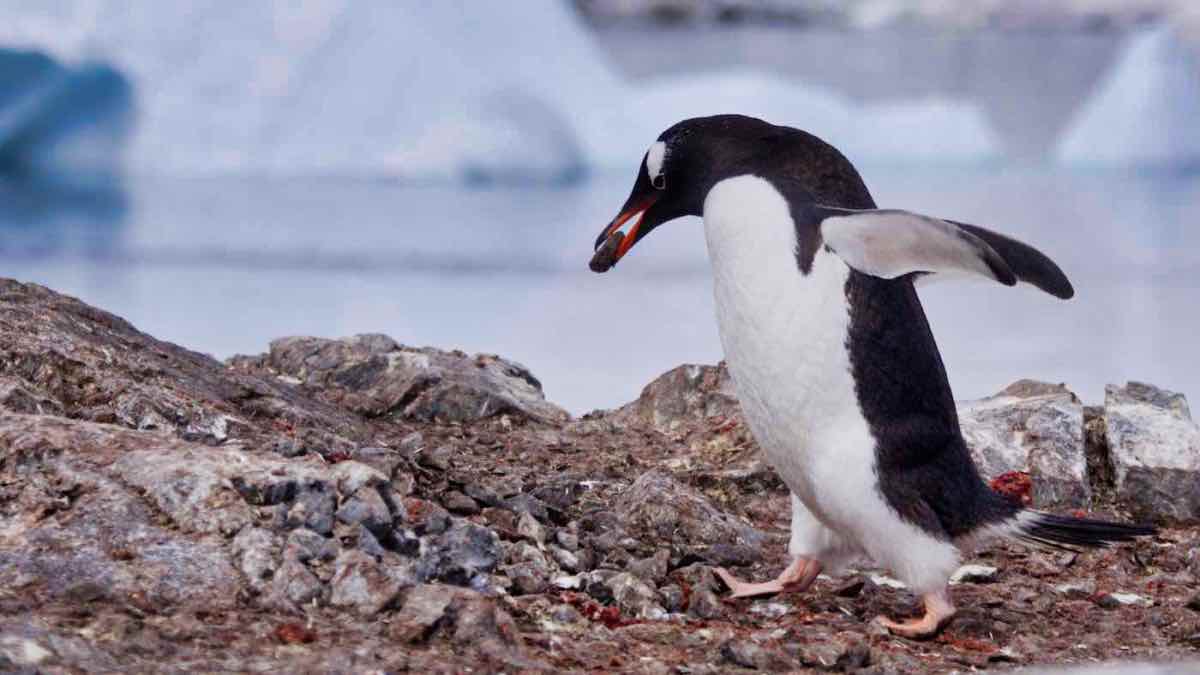
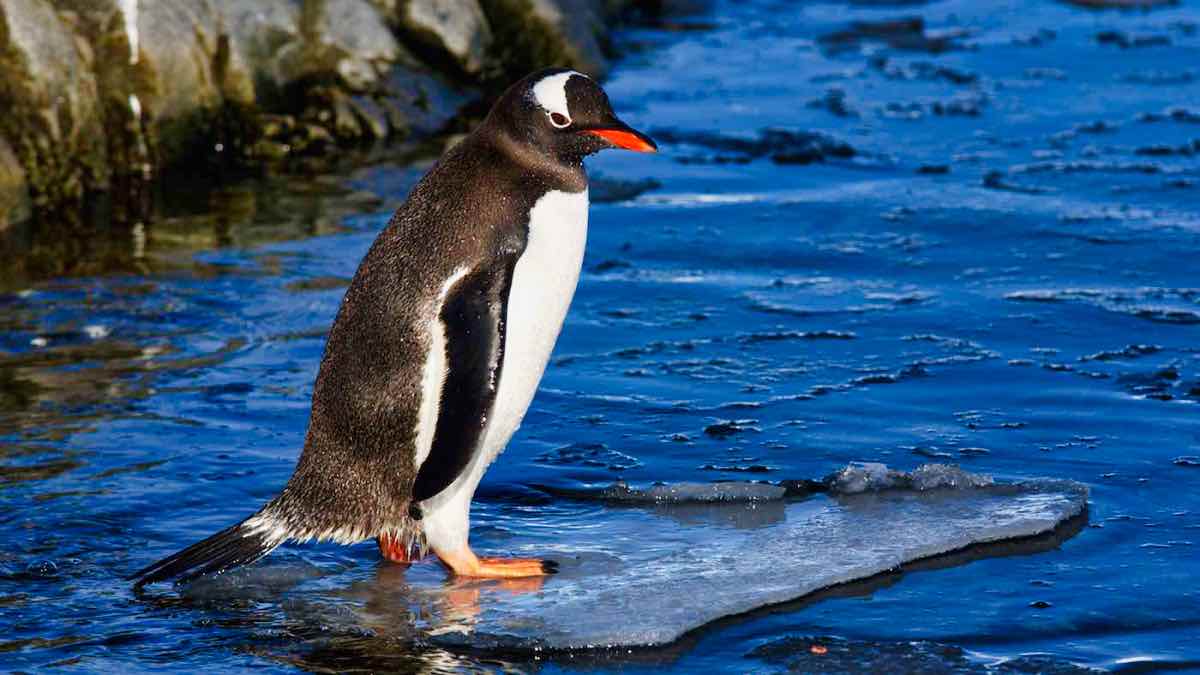
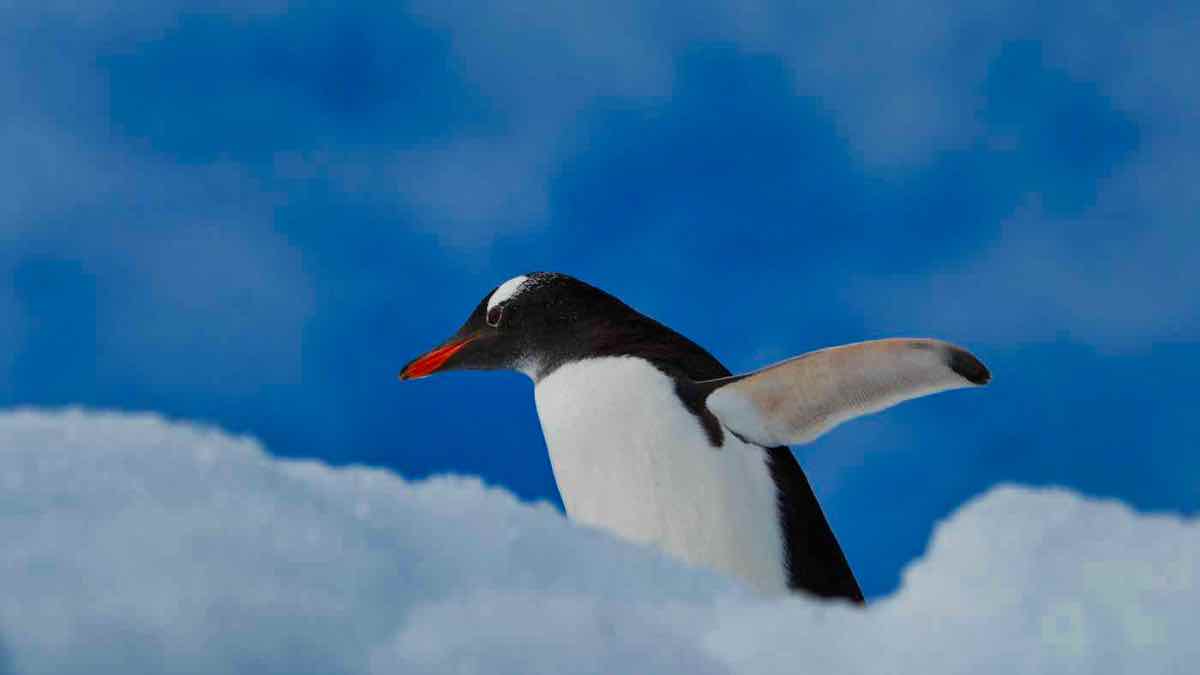
Gentoo Penguins are characterised by a white patch around and behind the eye that joins on the crown. The orange-red lower mandible is also a distinct feature. Two subspecies are recognised: a larger form in the sub-Antarctic and a smaller, but otherwise similar subspecies on the Antarctic Peninsula. Juveniles are very similar to adults, but the white eye-patch is not connected to their white eye-rings until they moult at an age of 14 months.
Habits:
Colonies are usually smaller than those of other Pygoscelis penguins and are less densely packed. In the sub-Antarctic the nests are often found amongst tussocks, whereas on the Antarctic Peninsula they nest on stony ice-free areas and beaches.
Distribution: map
Mainly in the sub-Antarctic, but extending to the Antarctic Peninsula. Breeds on Staten, Falkland, South Georgia, South Sandwich, South Orkney, South Shetland, the Antarctic Peninsula, Marion, Prince Edward, Crozet, Kerguelen, Heard, and Macquarie Islands. There is some evidence that the size of colonies depend on the local width of the continental shelf, i.e. the available inshore foraging area.
Migration and Vagrancy:
Gentoo Penguin can be found near their colonies all year round unless ice prevents access, as it can in the southern parts of their range. Nevertheless, vagrants have been found as far north as 43°S on the Argentinean coast as well as in Australia and New Zealand.
Diet:
Dietary composition varies between season and locations but generally crustaceans, in particular krill (euphausiids), are the dominant prey in the southern part of the range, whereas benthic fish are more commonly caught in lower latitudes. Squid play only a minor role.
Size: 5.6 kg (m), 5.1 kg (f)
Nest type: in colonies in the open
Favourite food: krill and fish
This is the most northern penguin of this genus and, in many other respects, the odd one out. In contrast to Chinstrap and Adelie Penguins, some Gentoo Penguins can be found around their breeding colonies all year round and they forage much closer inshore than the other two Pygoscelis species.
Gentoo Penguins are characterised by a white patch around and behind the eye that joins on the crown. The orange-red lower mandible is also a distinct feature. Two subspecies are recognised: a larger form in the sub-Antarctic and a smaller, but otherwise similar subspecies on the Antarctic Peninsula. Juveniles are very similar to adults, but the white eye-patch is not connected to their white eye-rings until they moult at an age of 14 months.
Habits:
Colonies are usually smaller than those of other Pygoscelis penguins and are less densely packed. In the sub-Antarctic the nests are often found amongst tussocks, whereas on the Antarctic Peninsula they nest on stony ice-free areas and beaches.
Distribution: map
Mainly in the sub-Antarctic, but extending to the Antarctic Peninsula. Breeds on Staten, Falkland, South Georgia, South Sandwich, South Orkney, South Shetland, the Antarctic Peninsula, Marion, Prince Edward, Crozet, Kerguelen, Heard, and Macquarie Islands. There is some evidence that the size of colonies depend on the local width of the continental shelf, i.e. the available inshore foraging area.
Migration and Vagrancy:
Gentoo Penguin can be found near their colonies all year round unless ice prevents access, as it can in the southern parts of their range. Nevertheless, vagrants have been found as far north as 43°S on the Argentinean coast as well as in Australia and New Zealand.
Diet:
Dietary composition varies between season and locations but generally crustaceans, in particular krill (euphausiids), are the dominant prey in the southern part of the range, whereas benthic fish are more commonly caught in lower latitudes. Squid play only a minor role.