.jpeg)
African Penguin
Scientific name: Spheniscus demersus
Size: 3.3 kg (m), 3.0 kg (f)
Nest type: burrow or under bushes/rocks
Favourite food: small fish
This is the only penguin breeding in Africa and was probably the first penguin encountered by Europeans. Numbers declined significantly during the Twentieth Century and their future has been jeopardized recently by major oil spills.
 Identification:
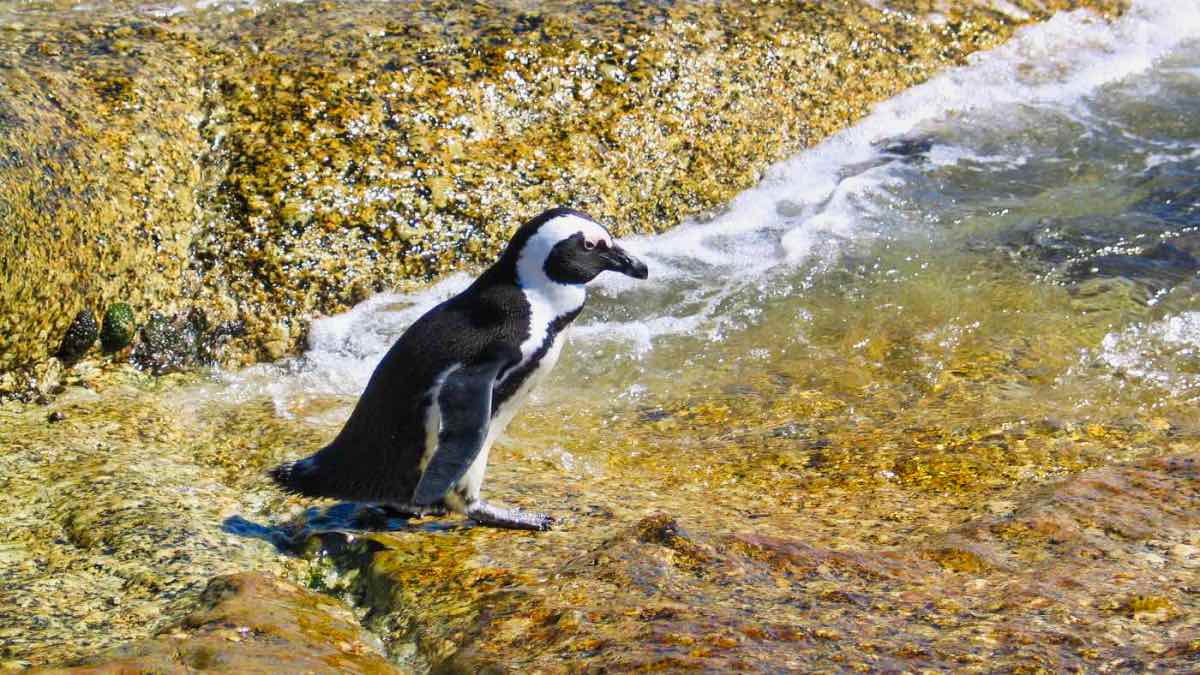
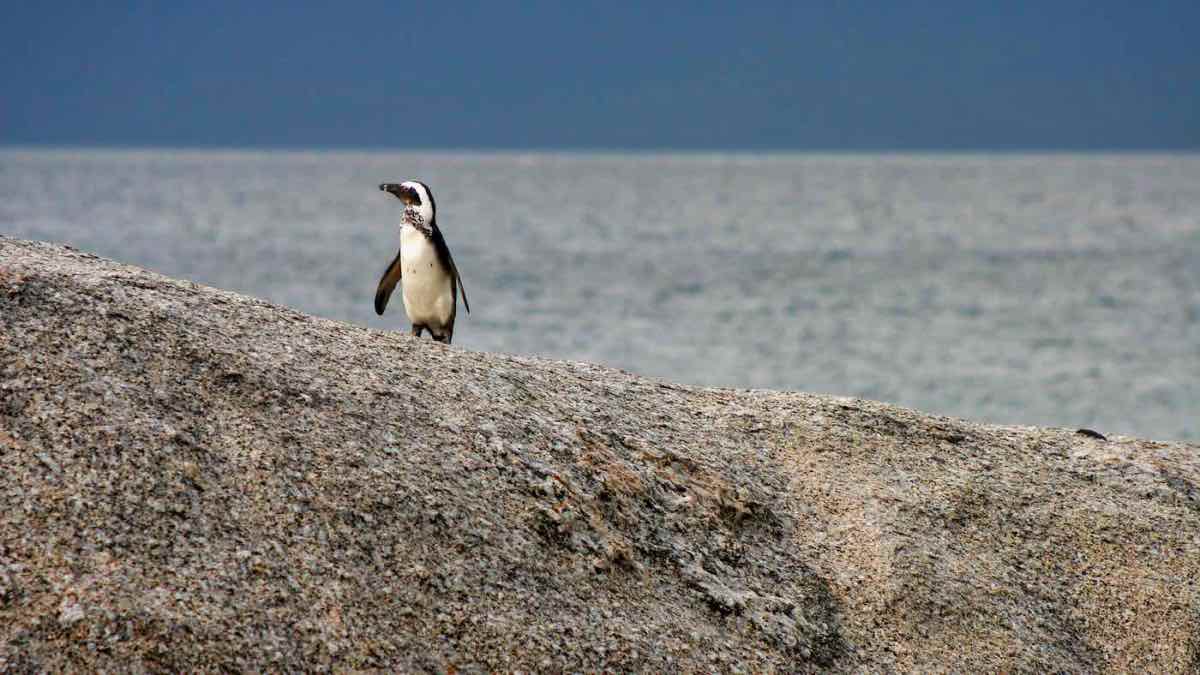
The only penguin occurring regularly in southern Africa. African Penguins, like Humboldt Penguins, differ from Magellanic Penguins in that they lack a second dark breast band (although some African Penguins do have an additional breast band). The area of naked skin reaches all around the eye and is more extensive than that in Humboldt Penguins. Immature African Penguins have a grey face and lack the pied pattern of adults. Adult plumage occurs after 14 months.
Habits:
African Penguins breed in burrows, rock crevices and under shrubs, often forming large colonies, with some numbering over ten thousand pairs. Breeding is poorly synchronised. Their loud braying voice led to them also being called Jackass Penguins. Birds forage close inshore, especially during the breeding season.
Distribution: map
As the name suggests, the African Penguin is endemic to southern Africa with the largest concentrations along the Benguela Current, which brings nutrient-rich water to the west coast of South Africa and Namibia.
Migration and Vagrancy:
Non-migratory. Vagrants have been found as far north as Setta Cama, Gabon, and Inhaca Island, Mozambique.
Diet:
Mainly fish (over 80%), in particular anchovy. Cephalopods and crustaceans are taken as well, but to a much lesser extent.
Size: 3.3 kg (m), 3.0 kg (f)
Nest type: burrow or under bushes/rocks
Favourite food: small fish
This is the only penguin breeding in Africa and was probably the first penguin encountered by Europeans. Numbers declined significantly during the Twentieth Century and their future has been jeopardized recently by major oil spills.
The only penguin occurring regularly in southern Africa. African Penguins, like Humboldt Penguins, differ from Magellanic Penguins in that they lack a second dark breast band (although some African Penguins do have an additional breast band). The area of naked skin reaches all around the eye and is more extensive than that in Humboldt Penguins. Immature African Penguins have a grey face and lack the pied pattern of adults. Adult plumage occurs after 14 months.
Habits:
African Penguins breed in burrows, rock crevices and under shrubs, often forming large colonies, with some numbering over ten thousand pairs. Breeding is poorly synchronised. Their loud braying voice led to them also being called Jackass Penguins. Birds forage close inshore, especially during the breeding season.
Distribution: map
As the name suggests, the African Penguin is endemic to southern Africa with the largest concentrations along the Benguela Current, which brings nutrient-rich water to the west coast of South Africa and Namibia.
Migration and Vagrancy:
Non-migratory. Vagrants have been found as far north as Setta Cama, Gabon, and Inhaca Island, Mozambique.
Diet:
Mainly fish (over 80%), in particular anchovy. Cephalopods and crustaceans are taken as well, but to a much lesser extent.