.jpeg)
Humboldt Penguin
Scientific name: Spheniscus humboldti
Size: 4.9 kg (m), 4.5 kg (f)
Nest type: burrow or cave
Favourite food: small fish
Endemic to the cold nutrient-rich waters of the Peru Current, the Humboldt Penguin breeds in a hot Mediterranean to desert climate. Populations fluctuate under the influence of El Niño events, which can cause significant breeding failure and adult starvation.
 Identification:
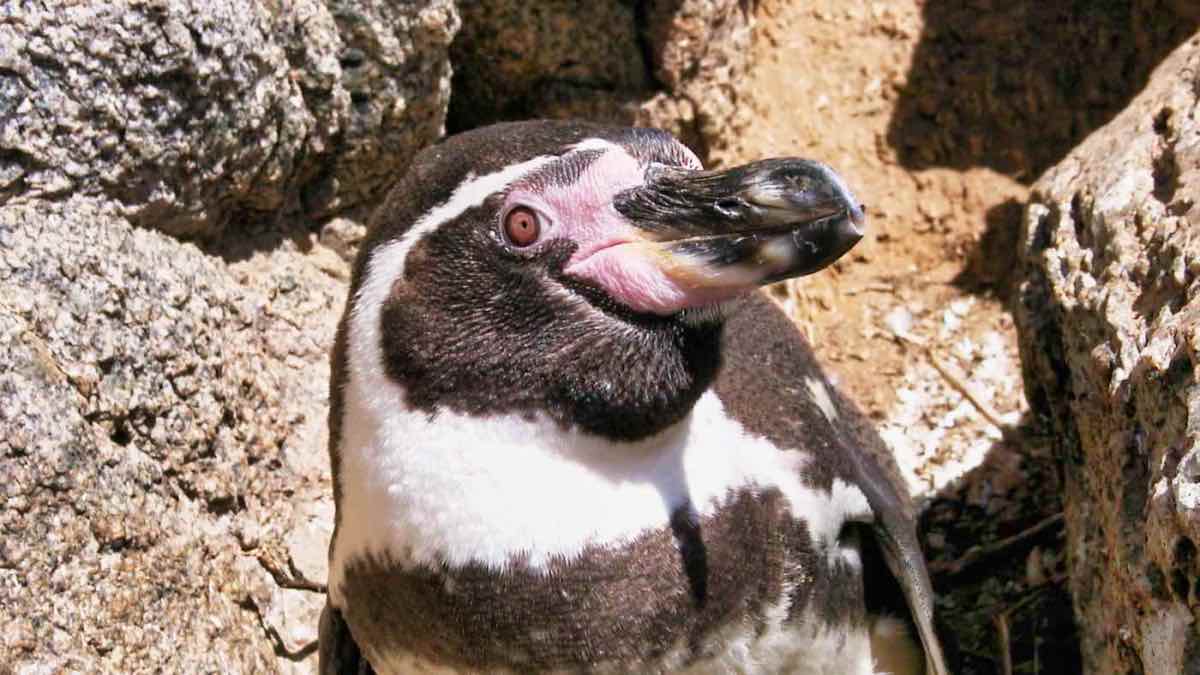
Similar to Magellanic Penguins, but lacks the second dark breast band and has a wider white band around the head. Humboldt Penguins also have more extensive areas of bare skin than Magellanic Penguins, including a pink fleshy patch at the base of the lower mandible. Immature birds are very similar to those of Magellanic Penguins but are generally darker on the head.
Habits:
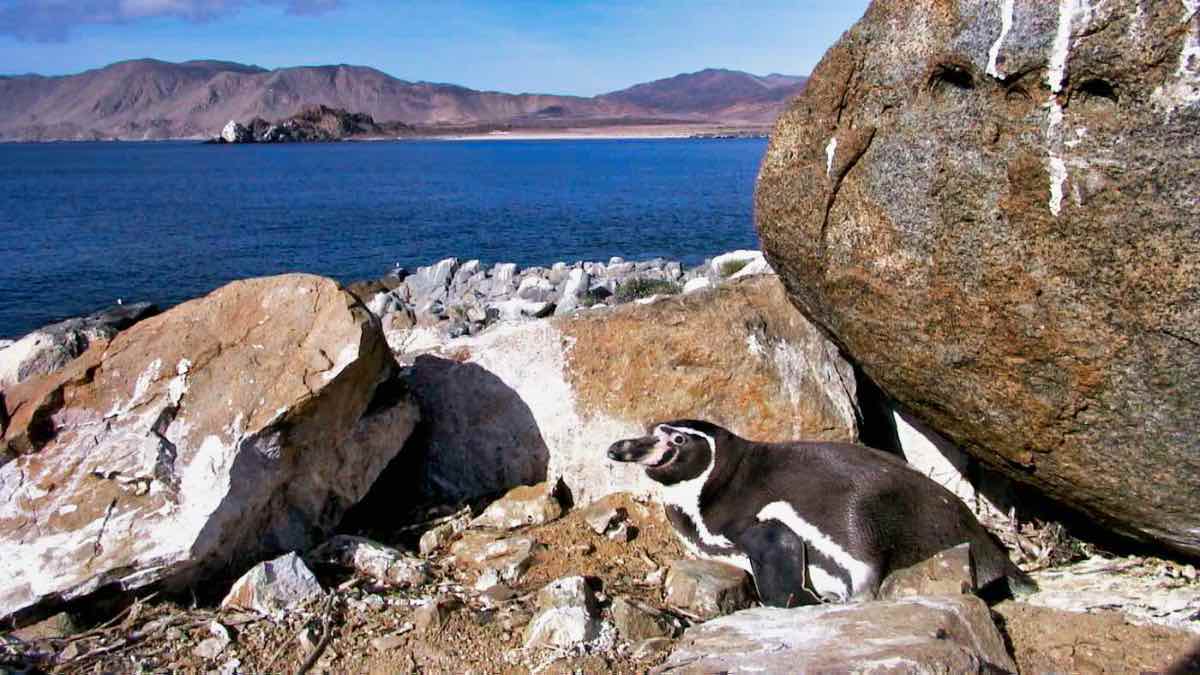
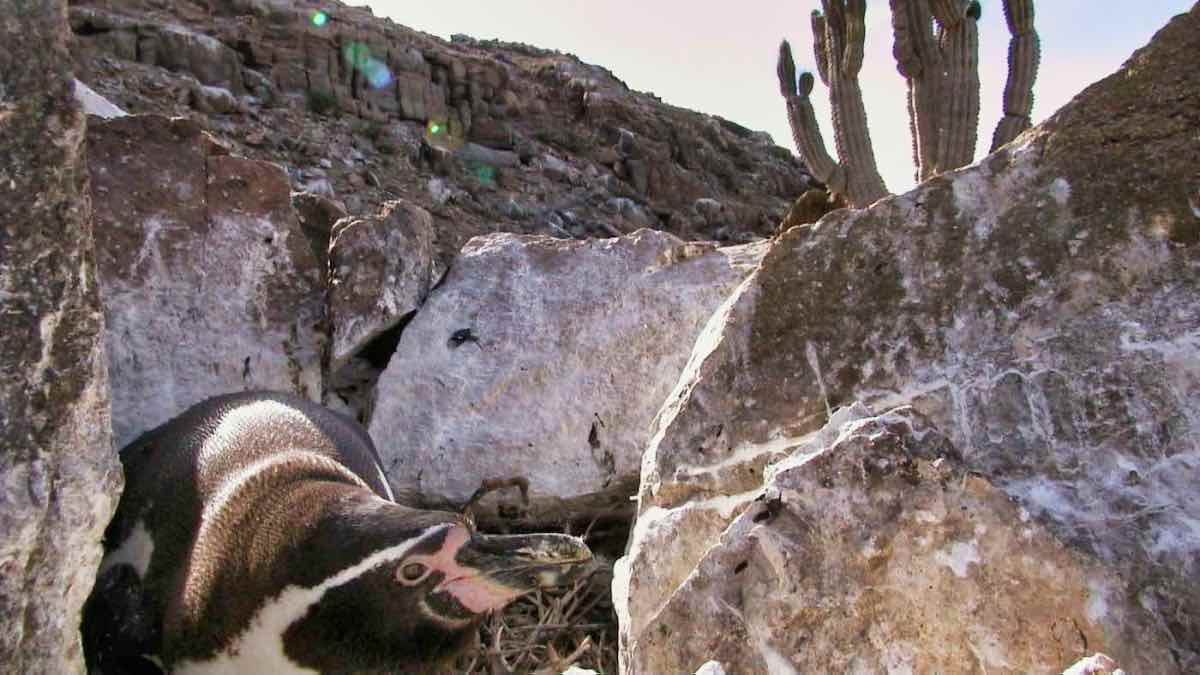
Humboldt Penguins nest in burrows - often dug into thick guano deposits, among boulders, in sea caves and sometimes in the open. Most birds depart the colony after sunrise and forage in close proximity to the colony. Foraging distances vary with location but Humboldt Penguins are typically inshore foragers. They are gregarious in the breeding colonies but are less so at sea. Captive birds moult once a year.
Distribution: map
Endemic to the Humboldt Current, breeding range extending from 5° S in Peru to 37°S in Chile, with isolated colonies existing as far as 42°S near Puerto Montt.
Migration and Vagrancy:
Probably sedentary. No vagrants have been reported. However, recent satellite telemetry studies have revealed that especially in years of poor food supply, these penguins will travel large distances.
Diet:
Small schooling fish like anchovies and sardines are the staple diet of Humboldt Penguins, supplemented with the odd squid.
Size: 4.9 kg (m), 4.5 kg (f)
Nest type: burrow or cave
Favourite food: small fish
Endemic to the cold nutrient-rich waters of the Peru Current, the Humboldt Penguin breeds in a hot Mediterranean to desert climate. Populations fluctuate under the influence of El Niño events, which can cause significant breeding failure and adult starvation.
Similar to Magellanic Penguins, but lacks the second dark breast band and has a wider white band around the head. Humboldt Penguins also have more extensive areas of bare skin than Magellanic Penguins, including a pink fleshy patch at the base of the lower mandible. Immature birds are very similar to those of Magellanic Penguins but are generally darker on the head.
Habits:
Humboldt Penguins nest in burrows - often dug into thick guano deposits, among boulders, in sea caves and sometimes in the open. Most birds depart the colony after sunrise and forage in close proximity to the colony. Foraging distances vary with location but Humboldt Penguins are typically inshore foragers. They are gregarious in the breeding colonies but are less so at sea. Captive birds moult once a year.
Distribution: map
Endemic to the Humboldt Current, breeding range extending from 5° S in Peru to 37°S in Chile, with isolated colonies existing as far as 42°S near Puerto Montt.
Migration and Vagrancy:
Probably sedentary. No vagrants have been reported. However, recent satellite telemetry studies have revealed that especially in years of poor food supply, these penguins will travel large distances.
Diet:
Small schooling fish like anchovies and sardines are the staple diet of Humboldt Penguins, supplemented with the odd squid.