Fiordland Penguin
Scientific name: Eudyptes pachyrhynchus
Size: 4.1 kg (m), 3.7 kg (f)
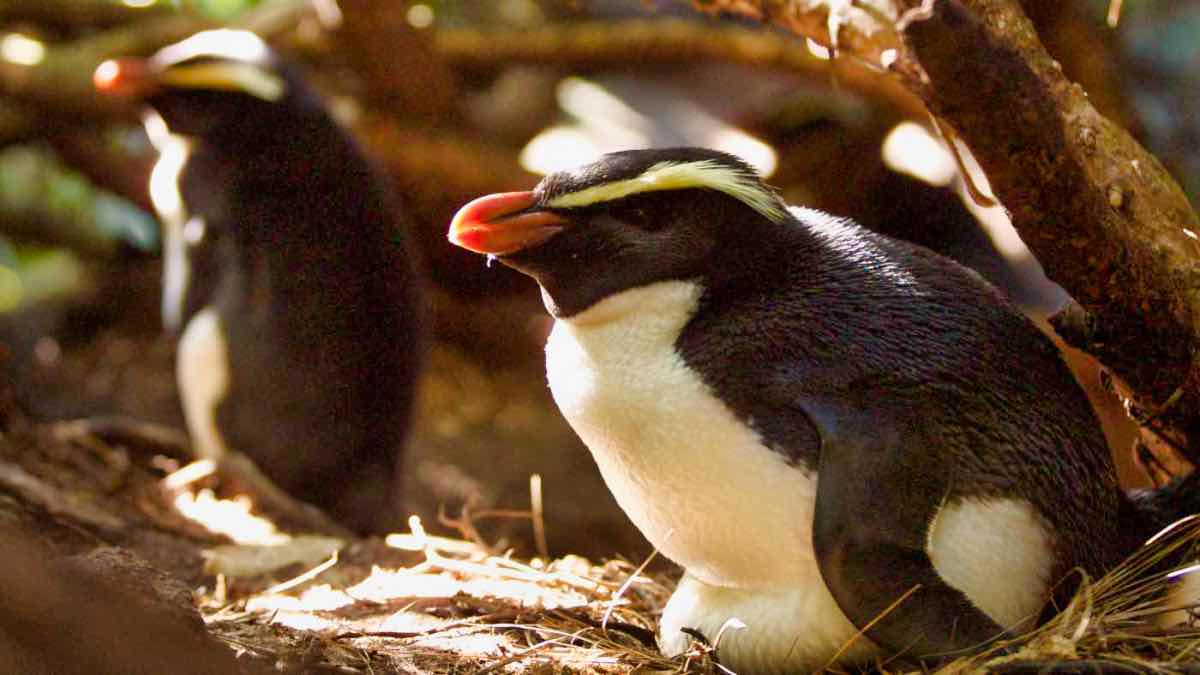
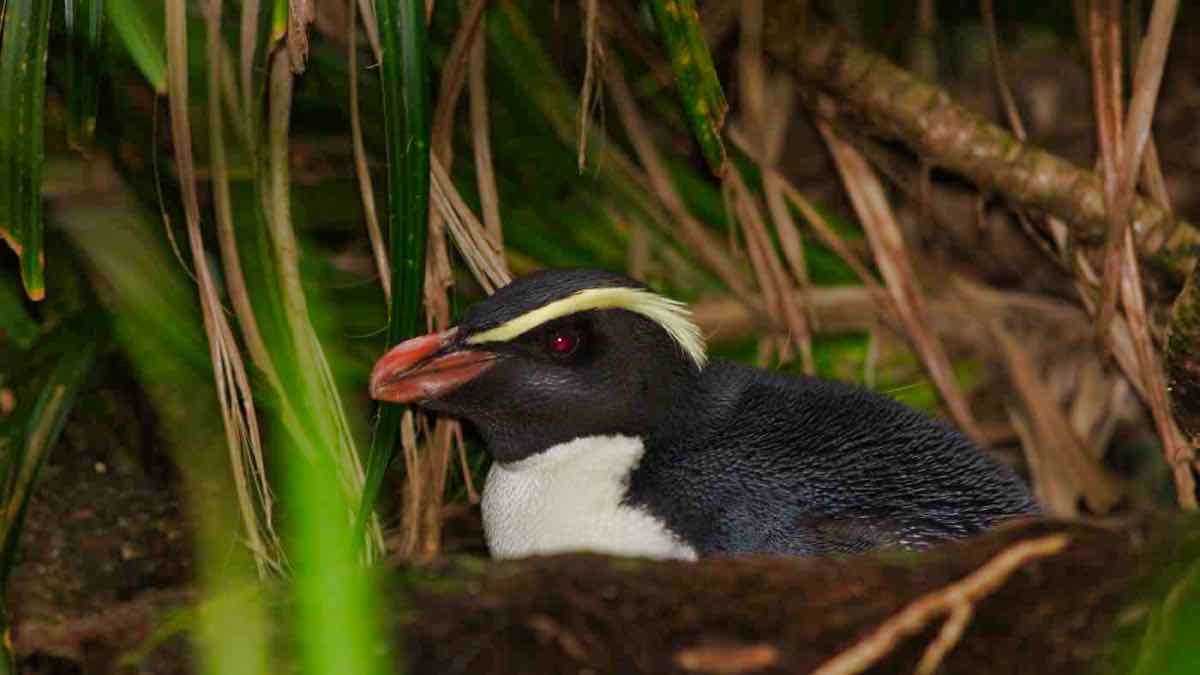
Nest type: in forest under vegetation or rocks; in caves
Favourite food: fish and squid
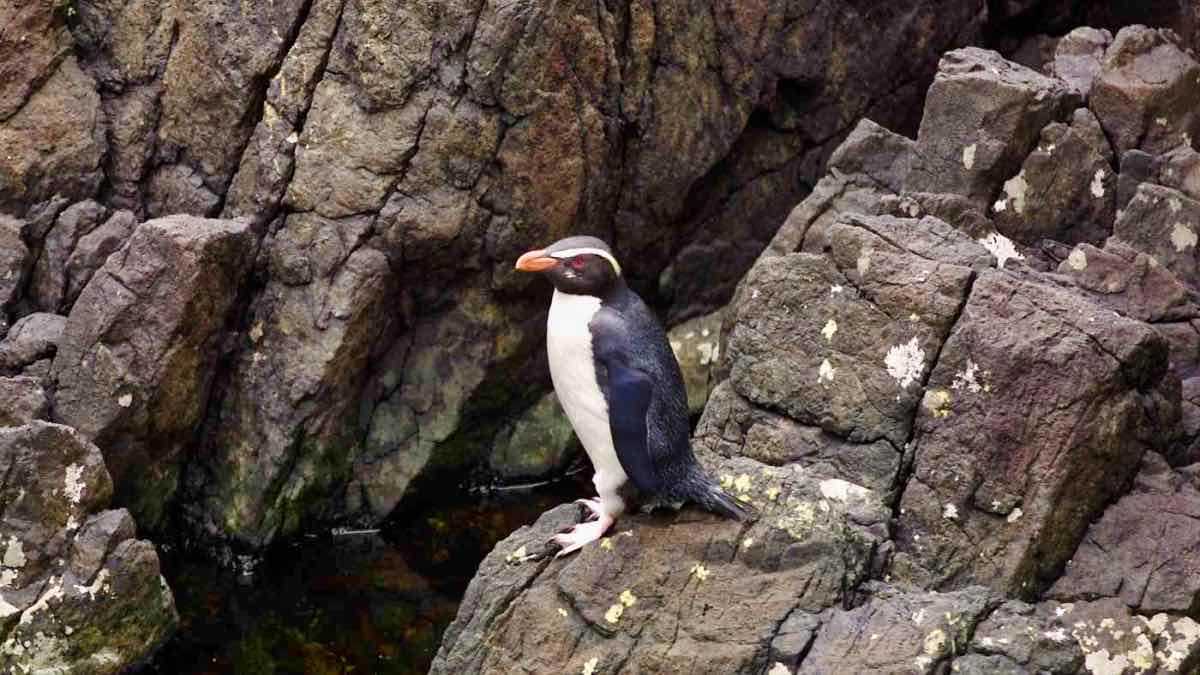
The Fiordland Penguin lives in the temperate rainforest of the southwest coast of the South Island and Stewart Island, New Zealand, where it is endemic.
 Identification:
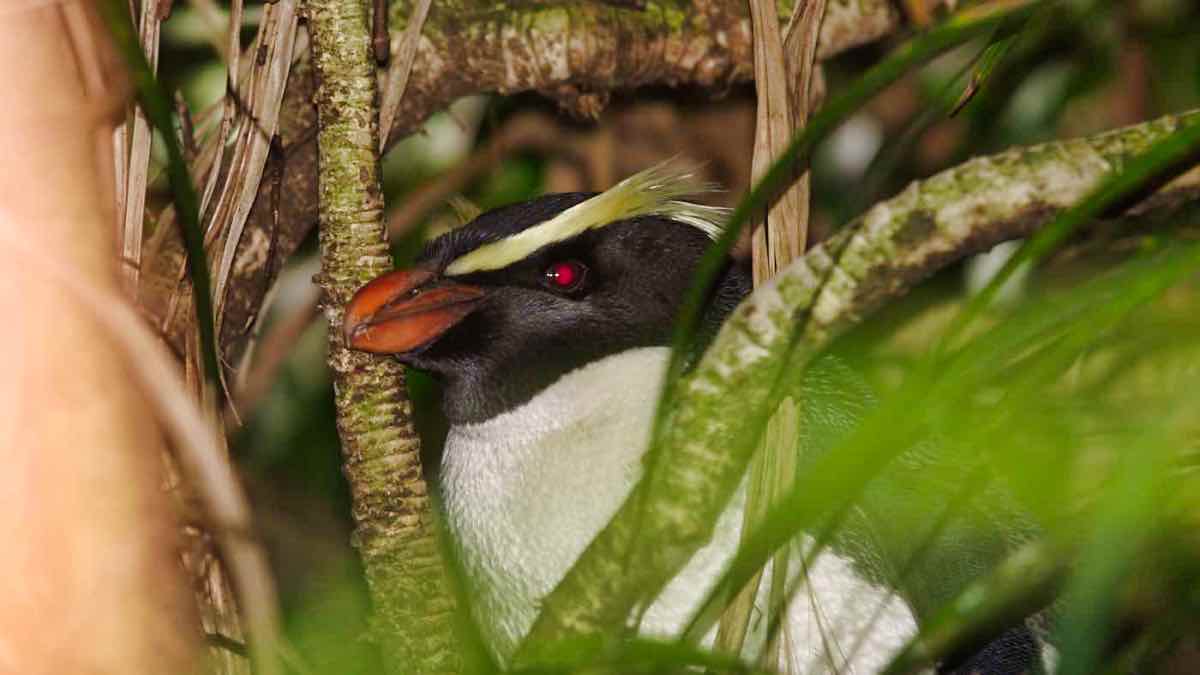
Similar to Snares Penguin, with a thick yellow stripe running above the eye and ending in a dropping plume. Distinguished from Snares Penguin by its larger size, a series of white streaks on the cheeks and the lack of a fleshy margin at the base of the bill. Immature birds have a mottled white chin, thinner dull yellow supercilium and probably cannot be safely distinguished from Snares Penguin.
Habits:
Fiordland Penguins breed under high rainforest canopy, in dense shrub, under boulders and in caves. The nests are lined with twigs and grass. Colonies usually consist of loose groups; nests can be several metres apart. All breeding grounds are north of the subtropical convergence. However, this oceanfront is close to most breeding sites and is likely to provide most of the food for breeding birds. The breeding season begins in June during the austral winter. Males fast for 40 to 45 days from arrival until their first foraging trip. The second-laid egg hatches several days before the first egg. The smaller chick from the latter typically dies within a few days due to starvation.
Distribution: map
Endemic to New Zealand. Breeds in the cold rainforest of the southwest coast of the South Island down to Stewart Island.
Migration and Vagrancy:
Migrates into the Tasman Sea as indicated by at-sea observations and the occurrence of moulting birds in eastern Australia. Moulting birds regularly occur also on the Snares Islands. Vagrants have been recorded on the Chathams, Campbell and Macquarie Islands, and as far as Western Australia in Australia.
Diet:
From the limited information that is available it appears that the diet can vary considerably between locations. A study from Codfish Island found that small pelagic fish larvae contributed over 80% of the food intake by mass, with the remaining portion made up by squid. On the west coast of the South Island, however, squid made up over 80% of the diet, crustaceans 13% and fish only 2%. Both studies, nevertheless, indicate that Fiordland Penguins mainly forage in pelagic waters undertaking shallow dives.
Size: 4.1 kg (m), 3.7 kg (f)
Nest type: in forest under vegetation or rocks; in caves
Favourite food: fish and squid
The Fiordland Penguin lives in the temperate rainforest of the southwest coast of the South Island and Stewart Island, New Zealand, where it is endemic.
Similar to Snares Penguin, with a thick yellow stripe running above the eye and ending in a dropping plume. Distinguished from Snares Penguin by its larger size, a series of white streaks on the cheeks and the lack of a fleshy margin at the base of the bill. Immature birds have a mottled white chin, thinner dull yellow supercilium and probably cannot be safely distinguished from Snares Penguin.
Habits:
Fiordland Penguins breed under high rainforest canopy, in dense shrub, under boulders and in caves. The nests are lined with twigs and grass. Colonies usually consist of loose groups; nests can be several metres apart. All breeding grounds are north of the subtropical convergence. However, this oceanfront is close to most breeding sites and is likely to provide most of the food for breeding birds. The breeding season begins in June during the austral winter. Males fast for 40 to 45 days from arrival until their first foraging trip. The second-laid egg hatches several days before the first egg. The smaller chick from the latter typically dies within a few days due to starvation.
Distribution: map
Endemic to New Zealand. Breeds in the cold rainforest of the southwest coast of the South Island down to Stewart Island.
Migration and Vagrancy:
Migrates into the Tasman Sea as indicated by at-sea observations and the occurrence of moulting birds in eastern Australia. Moulting birds regularly occur also on the Snares Islands. Vagrants have been recorded on the Chathams, Campbell and Macquarie Islands, and as far as Western Australia in Australia.
Diet:
From the limited information that is available it appears that the diet can vary considerably between locations. A study from Codfish Island found that small pelagic fish larvae contributed over 80% of the food intake by mass, with the remaining portion made up by squid. On the west coast of the South Island, however, squid made up over 80% of the diet, crustaceans 13% and fish only 2%. Both studies, nevertheless, indicate that Fiordland Penguins mainly forage in pelagic waters undertaking shallow dives.